HOTLINE:



MÔ TẢ CHI TIẾT
Whoa!
I wasn’t always sold on yet another browser wallet.
At first glance it seemed like another UI redesign with shiny buttons.
But my instinct said there was more going on under the hood.
As I poked around, somethin’ felt different — smarter defaults, clearer prompts, and a few features that actually prevent me from doing dumb stuff when I’m half-asleep and signing transactions.
Seriously?
Yes — because I’ve used a bunch of extensions over the years.
Initially I thought they were all roughly the same, but then realized small UX and security decisions change outcomes a lot.
On one hand a wallet that auto-saves convenience saves time; on the other hand it invites mistakes if you aren’t careful, though actually Rabby balances these tradeoffs in ways I respect.
I’ll be honest: this part bugs me when wallets pretend to be both casual and ultra-secure, but Rabby tries to be explicit about the choices it makes.
Hmm… here’s the practical bit.
Rabby adds transaction simulation, allowance controls, and clear multi-account flows — and those features matter.
You get a simulated execution that shows token changes and contract calls before you hit confirm, which reduces surprises.
The simulation is not perfect, of course, but it often catches the obvious failure modes and odd contract behavior, saving me from signing transactions that would otherwise eat gas or open unlimited allowances.
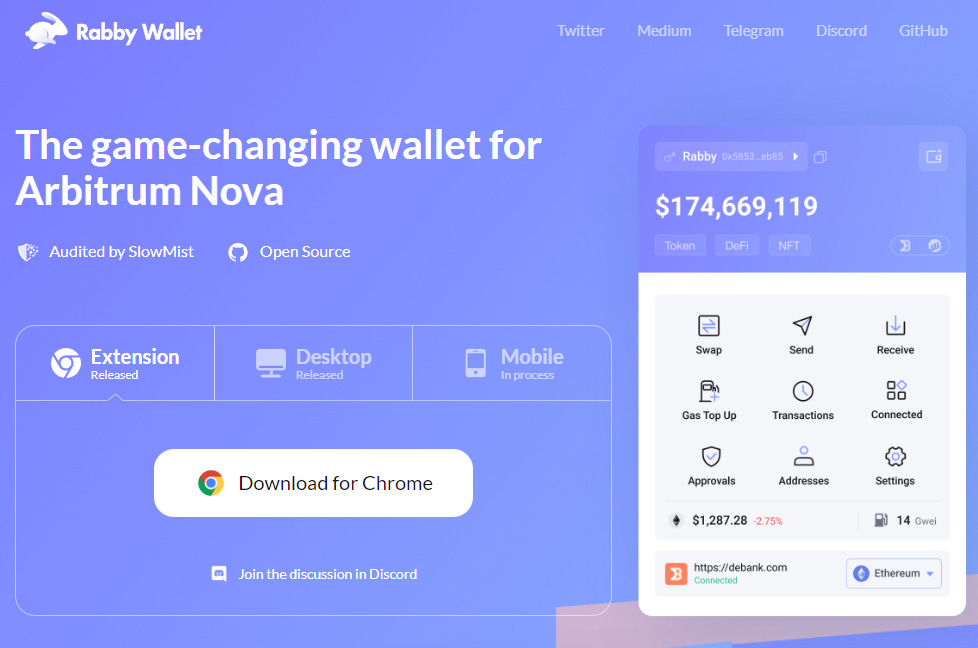
How to get started and a safe download
Okay, so check this out—start with the official extension link and verify sources.
If you want to download Rabby the straightforward way, use this page: https://sites.google.com/cryptowalletextensionus.com/rabby-wallet-download/ .
The key is to avoid random links from socials or search results that might point at phishing copies.
Get it from a source you can cross-check; do a little due diligence, and you’ll avoid the headache of restoring wallets from compromised seed phrases.
Trust me, I learned that the hard way — very very important lesson.
Here’s what I watch for next.
Set a strong password locally and then back up your seed phrase offline, not in cloud notes.
Hardware wallets pair nicely with Rabby for signing large transactions; you can keep daily-use accounts separate from your cold storage accounts.
On the other hand, if you use only extension keys, plan for the worst and store backups in multiple physical locations, because once the seed phrase is gone, there’s no help desk.
Something felt off about people treating seed phrases casually — that’s a risk I won’t take.
Short list time.
Rabby’s standout features are allowance management and transaction previews.
Allowance management lets you set exact token approvals instead of endless “approve all” traps that many dApps ask for, and that alone reduces exposure to malicious contracts.
The transaction preview gives you human-readable contract intents and a simulated outcome, which helps avoid signing phishy or oddly expensive transactions; it’s not foolproof but it’s a significant safety net.
Oh, and the UI makes it obvious which network you’re on, which is surprisingly rare but critical when you hop between mainnet and testnets or L2s.
Oh, and by the way — performance matters.
Rabby is lightweight and snappy in chrome-based browsers.
I noticed fewer slowdowns during heavy dApp interactions, and things felt more predictable.
For users juggling many wallets and networks, predictability beats flashiness every time, though your mileage may vary depending on extensions and tabs you already run.
I’m biased toward tools that minimize friction when I’m bridging, swapping, or batch signing for a project.
On the privacy front I have mixed feelings.
Extensions, by nature, expose some metadata like dApp connections and addresses to the browser process, and that can’t be totally hidden.
Rabby reduces exposure by making approvals explicit and offering easier revocation of allowances, so you can clean up granted permissions when you’re done.
Still, if privacy is your first priority, run separate browser profiles and consider using a dedicated browser for your on-chain activity to isolate cookies and trackers.
I’m not 100% sure that’s perfect, but it’s a pragmatic improvement I use every day.
One tricky area is gas and transaction batching.
Rabby surfaces gas options and estimated costs in a clear way, which helps when you need to prioritize speed vs cost.
If you need to send many transactions, splitting them across accounts or using batch execution tools reduces nonce issues and accidental replacements.
However, more advanced batching often requires extra tooling beyond the wallet, and Rabby plays nicely with those workflows by keeping consumable UI and predictable signing flows.
On the whole, it made my life easier when managing multiple deploys and contract interactions.
Initially I worried about learning curves.
Actually, wait—let me rephrase that: I worried my team would resent yet another new extension.
But adoption was smoother when I showed them the safety wins — like revoking allowances and transaction simulations — and we had fewer mishaps.
On one hand that felt like babysitting; on the other hand the reduction in “where did my tokens go?” tickets was worth the small onboarding time.
So yeah, the ROI on time spent teaching it was pretty good.
Final practical tips from the trenches.
Keep one account for small daily interactions and another for larger trades or contracts.
Revoke dApp approvals monthly, especially for obscure or new projects.
When connecting a hardware wallet, verify the signing details on the device and never approve from the extension alone if the device prompts matter.
If somethin’ smells phishy in the dApp UI or the transaction preview, pause — check the contract address and ask in trusted communities before proceeding.
Common questions
Is Rabby safe for ERC-20 and ERC-721 transactions?
Short answer: it’s safer than a default extension setup.
The allowance controls and transaction simulation reduce common risks for token approvals and transfers.
That said, nothing replaces cautious behavior — always verify recipient addresses and contract interactions, and for large transfers prefer hardware-assisted signatures.
Can I use Rabby with hardware wallets?
Yes.
Rabby supports hardware wallet integration for signing, which is great for high-value transactions.
Pairing a hardware key keeps your private keys off the browser, and Rabby’s interface makes the signing steps clear so you can verify actions on the device screen.
What about recovering a lost wallet?
If you lose access to your extension but have the seed phrase, you can restore in any compatible wallet that accepts the same phrase format.
If you lose the seed phrase too, there’s no recovery path — that’s the hard truth of self-custody.
So keep backups offline, with redundancy, and treat them like the keys to a safe deposit box.
LÝ DO BẠN NÊN CHỌN DỊCH VỤ CỦA CHÚNG TÔI

TƯ VẤN HỖ TRỢ 24/7

THIẾT KẾ THEO Ý TƯỞNG KHÁCH HÀNG

TƯ VẤN QUÀ TẶNG CHUYÊN NGHIỆP

GIAO HÀNG ĐÚNG HẸN GIÁ CẢ CẠNH TRANH

HÀNG HÓA ĐẢM BẢO CHẤT LƯỢNG

LUÔN ĐỔI MỚI PHÙ HỢP VỚI XU THẾ